Bingo Grids as Frameworks for Exploring Combinatorial Thinking in Classroom Math Lessons
Casey Perry · Sep 20, 2026
Bingo Grids as Frameworks for Exploring Combinatorial Thinking in Classroom Math Lessons
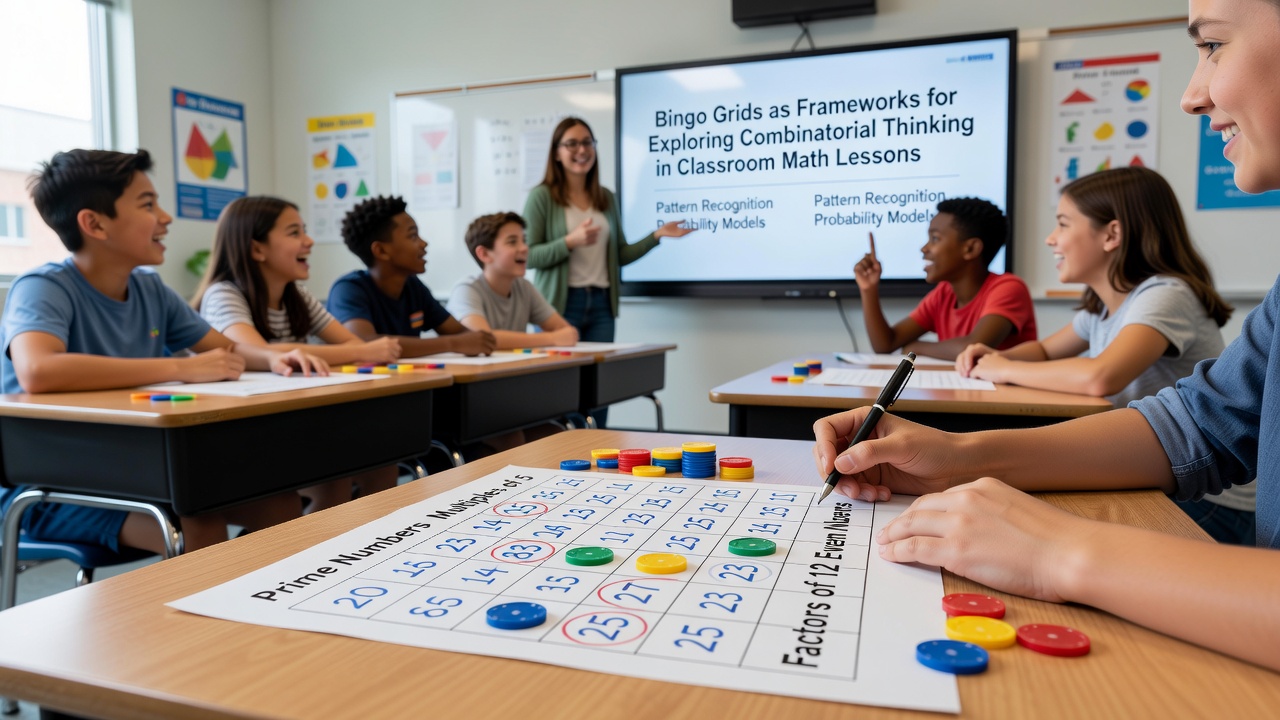
Bingo grids present structured 5x5 arrays that contain randomly selected numbers drawn from larger pools, and these layouts allow students to examine how selections combine under specific constraints while teachers guide explorations of counting principles and arrangement possibilities.
Core Structure of Bingo Grids and Basic Combinatorial Elements
Standard bingo cards feature columns labeled B-I-N-G-O with number ranges assigned to each, such as 1-15 in the B column, and students count the total ways to populate a single column by selecting five distinct numbers from fifteen possibilities which demonstrates the combination formula C(15,5) in direct application. Researchers have noted that varying the grid constraints, like restricting certain columns or introducing free spaces in the center, changes the calculation to account for fixed positions and remaining choices, and this adjustment introduces layered problems where learners apply both combinations and permutations sequentially.
Data from classroom implementations shows that students progress from simple column counts to full-grid analyses by calculating how many unique cards exist when numbers are drawn without replacement across multiple columns, and observers note that these exercises build familiarity with factorial notations and multiplicative counting rules.
Integrating Probability Concepts Through Grid Analysis
Teachers extend combinatorial exercises by asking classes to determine the likelihood of completing specific patterns, such as a single horizontal line versus the entire card, and these tasks require students to compare favorable outcomes against total possible number draws. Evidence from educational studies indicates that bingo-based probability modules improve retention of concepts like dependent events because each drawn number alters the remaining pool size, and the grid format visualizes these shifts clearly.
One documented approach involves groups constructing sample spaces for smaller 3x3 variants first, then scaling up to standard sizes, and this progression helps learners recognize how sample space size grows exponentially with added dimensions while they track winning conditions through tree diagrams or organized lists.
Classroom Activities and Curriculum Connections
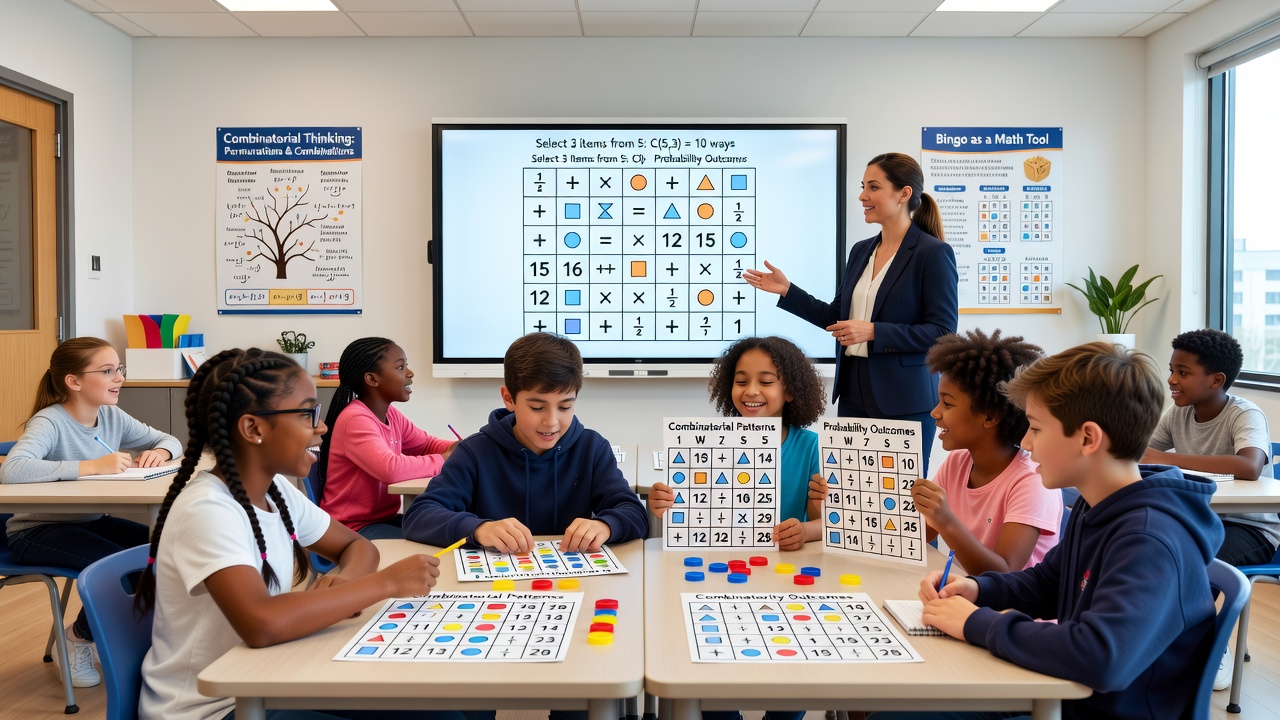
Educators design lessons where students generate their own bingo grids under given rules and then compute the number of distinct grids possible when certain numbers must appear together or when column sums reach target values, and these projects connect directly to standards in combinatorics and discrete mathematics. According to materials from the U.S. Department of Education, game-based frameworks like these support development of logical reasoning skills across grade levels when integrated into existing probability units.
Activities often include challenges where classes compare two different grid designs and calculate which version yields more winning combinations under identical draw sequences, and participants use spreadsheets or manual enumeration to verify results. Data collected in multiple districts reveals measurable gains in problem-solving speed after repeated exposure to such grid manipulations, particularly when students explain their reasoning to peers during group reviews.
Extensions to Advanced Topics and Cross-Curricular Links
Advanced classes explore symmetries within bingo grids by identifying invariant patterns under rotations or reflections, then count the distinct configurations that remain after accounting for these operations using Burnside's lemma as an introduction to group theory applications. Observers report that linking these counts to real-world scheduling problems, such as assigning limited resources without repetition, reinforces the practical value of combinatorial methods beyond the game itself.
Programs in regions including Canada and Australia have incorporated similar grid exercises into middle-school mathematics sequences, and resources from the Australian Curriculum highlight connections between bingo activities and broader topics in counting and chance. In September 2026 several school districts plan updated workshops that feature expanded bingo-grid modules to align with revised discrete math guidelines.
Conclusion
Bingo grids supply concrete models for combinatorial exploration that scale from basic counting exercises to sophisticated probability and symmetry investigations, and classroom data confirms their utility in building structured thinking habits. Educators continue to refine these frameworks by adapting grid parameters to match evolving curriculum requirements while maintaining focus on verifiable calculations and pattern recognition.